
004: How to encourage creativity and artistic ability in young children – Interview with Dr. Tara Callaghan
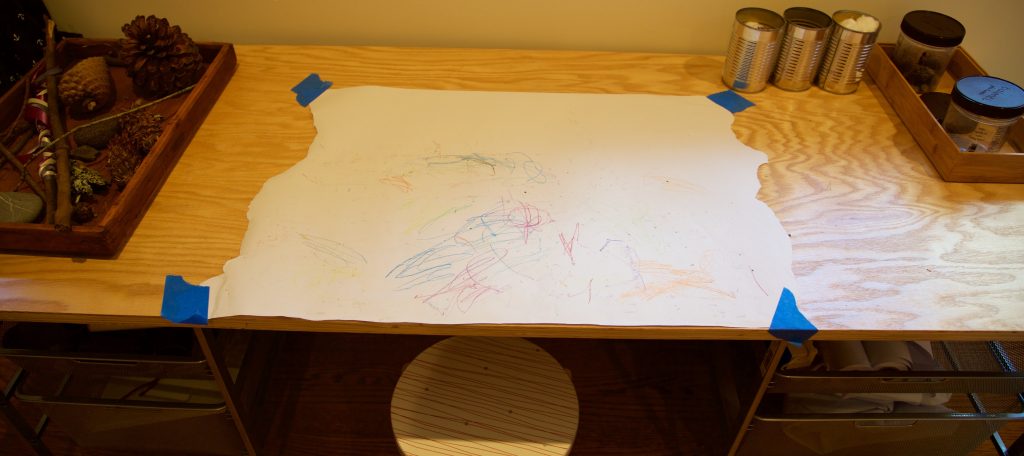
I’m so excited to welcome my first guest on the Your Parenting Mojo podcast: Professor Tara Callaghan of St. Francis Xavier University in Nova Scotia. Professor Callaghan has spent a great number of years studying the emergence of artistic ability in young children and she shares some of her insights with us. This is a rather longer episode than usual so here are some places you might want to skip ahead to if you have specific interest:
03:55 The connection between individuality and creativity, especially in Western cultures
09:00 What is “symbolic representation” and why is the development of symbolic representation an important milestone for young children?
12:10 Is it helpful for parents to ask a child “What are you drawing?”
15:25 When do children understand symbols?
31:15 What can parents do to support children’s development of symbolic representation in particular and artistic ability in general?
Dr. Tara Callaghan’s Book
Early social cognition in three cultural contexts – Affiliate link
References
Brownlee, P. (2016). Magic Places. Good Egg Books: Thames, NZ (must be ordered directly from the publisher in New Zealand; see: http://penniebrownlee.weebly.com/books.html)
Callaghan, T.C., Rackozy, H., Behne, T., Moll, H, Lizkowski, U., Warneken, F., & Tomasello, (2011). Early social cognition in three cultural contexts. Monographs of the Society for Research in Child Development, 76(2), Serial Number 299. http://onlinelibrary.wiley.com/doi/10.1111/mono.2011.76.issue-2/issuetoc
Callaghan, T. & Corbit, J. (2015). The development of symbolic representation. In Vol. 2 (L. Liben & U. Muller, Vol. Eds.) of the 7th Edition (R. Lerner, Series Ed) of the Handbook of Child Psychology and Developmental Science (pp. 250-294). New York: Wiley.
Callaghan, T., & M. Rankin (2002). Emergence of graphic symbol functioning and the question of domain specificity: A longitudinal training study. Child Development, March/April 2002, 73:2, 359-376.
Callaghan, T., P. Rochat & J. Corbit (2012). Young children’s knowledge of the representational function of pictoral symbols: Development across the preschool years in three cultures. Journal of Cognition and Development, 13:3, 320-353. Available at: http://www.psychology.emory.edu/cognition/rochat/lab/CALLAGHAN,%20ROCHAT,%20&%20CORBIT,%202012.pdf
DeLoache, J. S., (2004). Becoming symbol-minded. Trends in Cognitive Sciences, 8, 66-70. Retrieved from: http://www.sciencedirect.com/science/article/pii/S1364661303003346
Frith, C., & Frith, U. (2005). Theory of mind. Current Biology 15(17), R644.R645. Full article available at: http://www.sciencedirect.com/science/article/pii/S0960982205009607
Ganea, P.A., M.A. Preissler, L. Butler, S. Carey, and J.S. DeLoache (2009). Toddlers’ referential understanding of pictures. Journal of Experimental Child Psychology 104(3):283-295. Full article available at: http://www.ncbi.nlm.nih.gov/pmc/articles/PMC2865246/
Golomb, C. (2003). The child’s creation of a pictoral world. London: Psychology Press.
Jolley, R.P. (2010). Children and pictures: Drawing and understanding. Wiley-Blackwell, Cichester, England.
Jolley, R. P. & S. Rose (2008). The relationship between production and comprehension of representational drawing. In Children’s understanding and production of pictures, drawings, and art (C. Milbrath & H.M. Trautner (Eds)). Boston, MA, Hogrefe Publishing. Chapter available at: http://www.staffs.ac.uk/personal/sciences/rj2/publications/Jolley%20and%20Rose%20chapter.pdf
Kellogg, R. (1970). Analyzing Children’s Art. Mayfield Publishing Company, Mountain View, CA.
Preissler, M.A., and P. Bloom. Two-year-olds use artist intention to understand drawings. Cognition 1[06:51]2-518. Full article available at: http://citeseerx.ist.psu.edu/viewdoc/download?doi=10.1.1.522.4017&rep=rep1&type=pdf
Rochat, P. & T. Callaghan (2005). What drives symbolic development? The case of pictoral comprehension and production. In L. Namy (Ed.) Symbol use and symbolic representation. Mahwah, NJ, Lawrence Erlbaum Assoc. Chapter available at: http://www.psychology.emory.edu/cognition/rochat/lab/WhatDrivesSymbolicDevelopment.pdf
Winner, E. (1985). Invented worlds: The psychology of the arts. Cambridge, MA: Harvard.
Also published on Medium.
Transcript
Hello, this is Jen Lumanlan of Your Parenting Mojo and I'm here with episode 4 on creativity and artistic ability in young children. So the question, that's lovely, what is it, seems to be one of the most asked by parents of children related to young children's drawings, but do children even know what it is? I'm really excited to welcome my first guest on Your Parenting Mojo podcast today, Professor Tara Callaghan. I want to start by introducing her, by telling you a little bit about how we met. So I visited Reggio Emilia, Italy in April two thousand sixteen because I wanted to learn more about the approach to early childhood education that was founded in that city. And before I went, I read a book called Magic Places by Penny Brownlee, which says that a parent shouldn't ask what a scribbling child is drawing because they're not drawing anything, they're just scribbling. But in contrast, the people in Reggio Emilia believe that the children is fully aware of the representative process, and that's actually a quote from one of the practitioners there, after I witnessed a group of under two-year-olds, I think they were about 18 months, who had been given a set of orange, a real orange and a set of orange paints. And the toddlers were making orange paint marks on the paper because that was the only color that was available to them. And based on my reading of Magic Places, I queried whether the toddlers could possibly understand that they were being asked to represent the orange on the paper. And clearly the director thought that they could. Her position was that even if the marks don't look like an orange to us, the toddlers understand the marks as a representation of an orange. When I returned home, I started digging into the research on this topic and ultimately found a chapter that Professor Callaghan authored in a book called Children's Understanding and Production of Pictures, Drawings and Art. And it was the most comprehensive and insightful piece I'd read on that topic. And she expressed a view that was quite different from what the regio practitioners believe. So I reached out to her and she was kind enough to actually spend quite a bit of time patiently answering my questions. So I could write a very long post about it on my personal blog, which was actually the thing that made me realize that I should start a podcast. So to formally introduce her, Professor Callaghan is a professor of psychology at St. Francis Xavier University in Nova Scotia. She's a developmental scientist working in the fields of symbolic and pro-social development from a cultural perspective. She received her PhD in psychology from Brown University and completed a postdoctoral fellowship at Yale University. And she served as consulting editor for the journal Child Development. And she also co-authored the chapter on symbolic development in the new two thousand fifteen edition of the Handbook of Child Psychology and Developmental Science, which if you don't happen to be familiar with it is a pretty seminal work on the psychological development of young children. So thank you so much for joining us, Dr. Callaghan.
Dr. Callaghan:Oh, my pleasure, Jen. My pleasure. So thanks for the introduction. I might add to that I am also very interested in cultural developmental psychology and so maybe some of that will come up as we talk a little bit more today. But one of the things that I've been doing for about the past decade is looking across cultures to see, to help understand what children know as a result of the socialization that they get from parents and others in their culture compared to what how we are built as humans, I guess. What is our human nature?
Jen Lumanlan:Yeah, I'm actually very interested in that as well. So do feel free to sprinkle that in as it comes up. Awesome. Okay, well the first thing I want to ask you about is something that I hadn't even considered until you kind of mentioned it as an offhand comment as part of a larger discussion that we were having when we were emailing. And you said that creativity is highly valued in our society and is part of our individualist orientation. Creativity that makes a difference in art depends on the ability to do and see things differently and also have a command of the medium. And it was the first part of that that really blew my mind. I really hadn't considered the possibility that not all cultures value creativity equally. I just figured that if everybody had access to crayons and paper, everybody would give their child crayons and paper and would pretty much do the same thing as I do with my child. So I wonder if you could tell me a bit more about this.
Dr. Callaghan:Yeah, I think that what I was focused on was thinking about how we define creativity in our own society. And by our own I'm talking about a kind of middle-class, North American, European, Eurocentric kind of what is typically called the Western orientation. So in the West we're well known for valuing independence and independent thought. And if you are in a society that values that, then a lot of different things, including creativity, get defined in a way that meets those societal goals. And then if you're a parent, you're trying to, without really even being aware of this, you are instilling the cultural values in your children as you parent them. So I think in different art forms this may be more or less true, but my observation of art and my experience with art in our culture is that to get ahead you have to be different from somebody else. You have to be contributing a new perspective or a new discovery, that sort of thing. And that's also the case in science, really, that we really are pushing to individuals to contribute something that's brand new. So when I say that it's highly valued, I think creativity is highly valued in probably every culture, but it may be defined in what constitutes or how the process of creativity may be seen to be different. Back to your issue about creativity and crayons and giving, it really comes down to what the parent's goals are in that society. And India is not a society, it's a multitude of societies, Canada likewise, US likewise. So when you try to think about a parent helping a child become creative, you've got to know what that parent's aims are, what are their parenting goals there. And part of that, those goals will be shaped by the society they find themselves in, and you may find more of a goal in the US and Canada in counteracting the larger society goals. So you might want to do things differently that you feel the larger society may hold children back or whatever. So you see a lot of that kind of independence in Canada, and I think that's really valuable. But probably becoming aware of your own goals, how they're influenced by the society you live in. And as a parent, we want our children, I would say, to become contributing members to the society that they find themselves in. And so shaping our child to fit in well with an individualist society where that's going to bring them the most success in their lives in terms of happiness and feeling that they are valued and making a contribution, I think is probably behind a lot of the shaping or parenting practices that we do. Like, how do you prepare your child if you want to foster creativity, which I think is a really great thing to do in any individual regardless of culture? Then how do you go about that and how do you predict what your society is going to be like when your child is becoming an adult and launching off to make their contribution to life? And so I think keeping tabs on what's going on in other cultures is a really good way to keep a handle on what your child's going to need. And creativity, I think, is a great way because the more adaptive we are to change and to new things and to seeing things from different perspectives, I think that that's where I put my money, is the better able we will be to adapt to whatever is coming down the road.
Jen Lumanlan:Great. So let's start digging a little bit into your research. Can you tell us about what symbolic representation means and why it's important?
Dr. Callaghan:A symbol is something that stands for something else. And a symbol can be, as you know, many forms. It can be a child's naive kind of drawing of a person, what we call the tadpole, which is a little head body with a couple of stick legs coming out of it. And sometimes an eye and a smile, as my grandson calls the mouth.
Jen Lumanlan:Just one eye.
Dr. Callaghan:Sometimes. Sometimes multiple eyes, when he really gets into that form. So that visual or very simple graphic can be a shorthand, if you like, or an image that stands for something else. So a symbol is something that stands in for or represents something else. And representation, when you put those together, symbolic representation is really about a process that you are intentionally creating a symbol in order to stand for something else. Now, why would humans even want to do that? Well, the ultimate goal of all symbols is to communicate with other humans. So that's it. symbolic representation is at the very basic foundation, it's about communication. And I said intentionally, forming that because of the scribbles, and you talked about the book that you had read, Magic Places, where she said, No, these scribbles don't mean anything. They very likely don't. And they very likely are. Sometimes children happen upon something that looks like it and can recognize the shape there. Their form perception is excellent, for sure. And their color perception is excellent by the time they're two. But their cognitive ability to understand such an abstract concept as stand for stand in for represent is not there yet. That's what I would, that's, you know, and that's a very strict criteria. So somebody will say, Well, my two year old drew something as, you know, and said, This is a dog. And then when I looked at it, it really looked like a dog. And sure, though, those kind of perceptual similarities, labeled after the fact, are precede genuine symbolic understanding. And it's all part of that process of how we help children, how we scaffold them to this understanding of these very complex terms. So if a child brings you a picture, and you say, What is it, then right away, the child's getting the message that there's meaning here. So, you know, you're, you're helping them to understand by that question, that meaning is involved when we do these kinds of things.
Jen Lumanlan:So do you think it is helpful for parents to ask the child? What is it? Does it scaffold that knowledge? And for if you if parents are listening, don't understand what the term scaffolding is, I have a whole episode coming up. Yeah, yeah. But is it? Is it something that helps the children's developmental process? Or does it make them aware of something that, you know, it might be better if they were naive about for a little bit longer?
Dr. Callaghan:I think that's almost an individual choice. I'm careful about how I ask questions, but I don't see a problem whatsoever of parents saying, Hey, what's that? That's so cool. And you know, having a discussion with the child, but not pushing it if a child is a parent can really tell whether the child's really grasping what they're asking them or not. And so that's where in your episode on scaffolding, you'll be talking no doubt about, you know, you children are in this zone of understanding, and there's some things they're capable of, and some things are not you have like this little boundary around you where you can understand some things not. And in that sweet spot, you can help children understand with particular questions like that. Oh, what's that? And let me draw something and look what I'm drawing. And then the child can see that when you have an object, you can make a figure look like it was a certain amount of motor control and intention. And then they're sort of getting at that process, what that process is all about. And scribbling is great fun for kids, you know, it's very enjoyable for children to work with a medium of paint or, or marker or whatever it is color and shape and make all and the and the graphic and graphic motor actions are really fun for them to do as well. So these I see all as important precursors. And then if you wrap that all up with an attentive parent, who is not imposing their own understanding on the child, but reading from the child's reactions, what is it that they understand? I think that if I if I were training, and I do train lots of students, I'm asking them to be completely open minded and not to have an idea ahead of time of what this child understands, just try to see, try to probe lightly without giving them the answer.
Jen Lumanlan:Or what kind of things do you say to me? What do you tell your students to say in that situation?
Dr. Callaghan:You would follow up but not lead the child down the path that you want them to go. So you mostly when we do experiments, we don't do we don't have any kind of dialogue with children. When we're done the experiment, we might follow up with when you did that, what did you mean? Or what is this part? And I noticed that you did this and so on. So mostly we would, we would keep our experiments really pristine and not influenced by an adult input whatsoever.
Jen Lumanlan:So you've also done you've done a lot of research on when children understand that pictures are actually symbols for a real object. Yeah, can you and I know you've spent many, many years thinking about this. Can you tell us just a little bit about it? And specifically, I'm interested in the fact that there are people who believe that maybe symbolic representation develops a little bit earlier than you do. And so what leads you to think that it comes in later than some other people do?
Dr. Callaghan:Well, there's a big move in developmental psychology always has been really toward finding the earliest onset of something, which is a really valuable goal. It's really important to do that because of that question that we talked about just briefly at the beginning, what do we have as part of human nature, and if it's part of human nature, it should show up very early in life, unless it's on a developmental timeline, like my gray hair didn't show up early in life. But it's still, it showed early. And so that's part of my genetic makeup. So we want to we want to sort out that and separate it from what is showing up as a result of training or experience and, you know, learning. So when it started to be discussed, I would say Judy Deloach was really the first one to bring this issue in in the early 80s in her research. And, you know, she was interested in three dimensional models and had a really great procedure. And she started talking about the fact that children don't understand the symbolic nature of 3D models, like a little truck, for example, or a little, she usually had a little room, a little playroom, and then would show children where she was hiding something. And they couldn't use that, that model of the room as a symbol until they were about three. So that began the debate really on, on do children understand. So if children see a picture, though, what I what I reasoned at the time was that children are seeing that picture of where Big Bird is hiding, and Big Bird's hiding behind the couch, say, and they and she shows them a picture of the couch, this is where he's hiding, now go in the room and find him. And they were able to do that at two and a half. But, but my reasoning was that those children are verbal now. And so they see a picture and they say couch, and they go in and they go to the couch. And so they're using language to actually scaffold their picture perception. And the picture may be long gone from them. And they may just use the picture as, as, you know, reading as we do with picture books with children. And we point to things and name them. So I started to think, how could I develop something that would actually show that it's children are actually understanding this picture. And so I did, you know, I tried to develop something where you couldn't. I guess my first strategy was to say they're wrong. And then to say, how can I show that when it is in fact that they do so to show that they were wrong, what I did was to, to remove the ability to take to use language in a picture. And once you do that, so for example, I have a picture, I had an artist draw pictures of little three dimensional animal toys that you get in zoo shops, that sort of thing. So I had two different cats, very different looking cats, but they're, you know, both cats. And so you show a picture of one of those cats, and then remove the picture. And immediately the two little cats are there, and ask the child to find the one that's in the picture. They're really at chance, they're, they're just like abysmal until they're about three, and then they get that.
Jen Lumanlan:When you say at chance, you mean they, they can't tell which one's in the picture?
Dr. Callaghan:It's 50/50. They'll half the time choose the one that was in the picture and half the time the other one. And so this is like looking across a number of trials for each child. And so every child prior to three is at 50/50. And the control for that is to show that if you do have language, then they can actually pick that. And so that one was like to have cat-dog. So you have that same picture of the cat, and that same little cat down there that goes with the picture paired with a dog. And children are, you know, 100% with that. So as soon as you remove language, children were doing badly. So that was a big revelation for me or, and for others who were starting to pay attention to that. So language, I think, is something that children are acquiring that symbol system earlier than they are any other symbol system, really, other than gesture. They, they're picking up gesture earlier than spoken language and verbal language. So showing that, and I did a number of other studies that really did demonstrate that perceptual similarity makes a difference in children's ability to use these pictorial symbols. But the bottom line is that you're seeing a shift between two and a half and three, whereas most children at the age of three are getting that special control of language, and most children at two and a half are not. So when I think about symbolic representation, and this whole intentional thing that we do as adults, where we are trying to communicate and we improve our message, if if that communication isn't getting through that, that spearheaded another experiment where I had children drawing and drawing very simple things. So I don't know if you've ever seen a spider ball, but they're rubber balls with black rubber coming out of them like little spiders. So I had children drawing large, small spider balls and spider balls with the hair and without the hair and three little spider balls versus one and those sorts of things. So it's all a circle in line and children in their scribbles by 18 months, they're doing circles in line. So their graphic motor is perfectly able to do that. It's whether they understand that this is a possibility that shifts. So I had children drawing and these children were between two and three. And children typically even at three will draw all of those things as a circle and that's it. When they do form a representation and anything that's a line or a circle is the simplest thing to end. And I always ask children when I'm asking for a drawing to be produced, to do something that can be done with those two forms. So give them the easiest task and see when that emerges, what is my strategy. So children were drawing things and then I then the next step was I would pick up a drawing and say, well, now I'm going to put your drawings with the things that you drew. And then I'll say, no, I can't tell which one this goes. Can you draw me another one so I can tell it goes with this one and hold up a spider ball. And then the older children started to put in those distinguishing marks so that I would know that it was the spider ball, not the regular ball and that sort of thing. So that's another indication that children, very young children, don't know about this communicative function of symbols. But older children closer to three do. They get that. So when you say I can't understand this, then they try to improve their message. And there had been one study done with language that showed that, I think it was Roberta Golinkoff who did this experiment where kids were in a high chair and they were asking for something and, you know, when children are still babbling and they're just about to produce words, she had the experimenter pretend that they couldn't understand the child, although it was probably pretty clear that they wanted the juice and not the Cheerios or something. And children actually improved their production. So I really took that as an inspiration for how to design that study I just talked about. It's like, say, you know, if children understand anything about the communicative function, then they should improve their symbols in that case. So that's another way that, you know, I attack the question. But the study that really made it clear for me was a study that I did that was kind of thinking, okay, so if I know I can reflect on the fact that I know that a picture is a symbol for something, when can children do that? That's a more sophisticated understanding. And there's something called theory of mind that we study in developmental psychology that made a huge splash about 25 years ago and is re-splashing because we think that infants have also got this understanding that other people are mental beings that are distinct from them. So they may hold in their minds different information than they themselves hold. So a child that has a theory of mind will know that you and I have different beliefs about an event. So the classic test is to say, oh, here's Susie and she loves chocolate and she's going outside to play, but she's going to put her chocolate in the cupboard. While she's outside, her mom comes and shifts the chocolate to another place. Where's Susie going to look when she comes back in? So the child knows that the chocolate was moved. Susie doesn't. She was outside. And so where's the child going to look? If the child understands that scenario as being here's two distinct minds, this child has a false belief. I, on the other hand, know where it is. So I have a true belief. And they'll make a prediction that she'll look in the wrong place where she left it.
Jen Lumanlan:And the child doesn't understand that somebody else could believe something that they know to be different.
Dr. Callaghan:The younger child doesn't understand that. So a three-year-old fails that task and says that Susie's going to look in the actual location where it was moved to.
Jen Lumanlan:Even though Susie was outside and couldn't possibly know that.
Dr. Callaghan:Right. And the five-year-old will know that she has a false belief and she's going to look in the place where she left it. So that's a classic task that's been used and shown that there's a shift between three and five. So you'll get about half of the four-year-olds passing and half failing. So that idea that you're holding in mind the idea of what another person knows was another inspiration for me to design a study where I said, OK, when do children hold in mind one way to see what they think a symbol is, is to see whether or not they think another person would use a picture as a symbol. So what we did in that study was to have children play with two sets of toys that are all intermingled like fish and bugs. And so you put, you know, about 12 items together and the child's playing with them. And then you say, OK, let's put them away now and we'll get some new toys. And they separate them, you know, put all the ones that belong with this picture in this bowl and all the ones. And children are fairly good at that. And so they will do that kind of matching at about two and a half, which is interesting because in other tests that I've done, two and a half-year-olds aren't doing so well. But one of the things that is possible, remember, is for them to use the verbal label. They see my child-like drawing of a fish and they say fish and they put all the fish in there. So they put them in and then the experimenter holds up one set and says, these are my, you know, my very favorite ones. I'm going to play with these. I'm just going out to get a drink. I'll be right back and I'll play with these when I get back. And so second experimenter hangs back with the child and says, hey, you want to play a trick? And let's do this. And they switch the items so that the fish go in the bug box and the bugs go in the fish box and the tops go on. And you also mess up the location. So the child can't just be making responses based on the location of the boxes. And what you do is you ask the question, so when John comes back, where is he going to look for his favorite toys? And if the child realizes that John's going to use the symbol of the item, then they should say he's going to look for his favorite, which were fish, in the fish box. If they don't understand that people use those as symbols, then they won't do well in that. So we did that and found a similar shift. Now that's a problem because it could just be that this perspective taking, this complex perspective taking that you have to do in theory of mind and in this task with pictures is just not capable younger, but children still understand the symbolic function of pictures. So what we did was to go to India, did the same task, found that Indian children passed the theory of mind task that I told you about, the false belief type of thing, but they failed the picture one. And why did they do that? We had already been to India and done a mega study of symbolic development and found that children there were somewhat delayed in their comprehension and production of pictorial symbols. And so we find that this theory of mind, which appears to be universally, it's just part of social interaction universally and children acquire that understanding between three and five. But the pictorial symbol is not universal. This is not something that's stressed in the young lives of children in the social lives. So the reason that children are delayed in pictorial symbol understanding, production, and then this reflective ability to understand the function of a symbol and that's also delayed, has nothing to do with cognitive capability. It has to do with the parenting goals, the socialization goals, the cultural values. What do you do and how do you shape young children? What are you preparing them for? And many people, many anthropologists who study children across different cultures have talked about the anomaly of the West in that parents playing with children, getting down, getting dirty with your child, and really like this intense socialization, cognitive training through play and so on, and the way that we value play as a stimulation for cognitive development, and it most certainly is. But there are other ways to stimulate cognitive development and those other ways may be more valued in other cultural settings.
Jen Lumanlan:So I want to sort of head towards a conclusion by bringing it back to what parents can do to support their children. So I'm imagining that the children probably don't just flip a switch one day and one day they can't engage in symbolic representation and the next day it suddenly all makes sense to them. They probably go through stages. And I'm wondering what, if anything, parents could or should do to help children through that developmental process.
Dr. Callaghan:There are a couple of people that did look very closely at stages. One of them is Claire Gollum, and she has a wonderful book that might be in a university library, but it's probably out of print, but she may have more recent books. I haven't kept up with her publication, but The Child's Creation of a Pictorial World by Claire Golomb is a Cambridge, no, California University Press publication, wonderful book. And another one is Ellen Winner did a book, must be almost 20 years ago now, called Invented Worlds. Both of those researchers, and Ellen Winner has done a chapter in two thousand, let me just think about this, two thousand fifteen, I think two thousand seven edition, the sixth edition of that handbook that I just published something on symbolic representation in, she published something on creativity that you might be interested in looking up. Both of those researchers look at different stages in the emergence of comprehension of a pictorial symbol and production. So to help a child through, I think just encourage and pull back when children are finding it tedious. And you will find different children have different tolerances for intervention. One great researcher in language development, Michael Tomasello, he's great in a lot of different areas, but one of the things he did very early on in his language development research was to identify two styles of parenting, one that's called follow-in, one that's called directed. And he did a seminal study that showed that parents who follow into what their child is attending to and label it in what we've come to call the name game, Jerome Bruner coined that term a long time ago. The name game is when children start pointing their pre-verbal, they point to things and say something like that. And they're really asking what is that?
And they get into this, the fun of naming things. And parents who follow into what their child is attending to and start labeling and expanding upon it and so on, have children who acquire language earlier than children who the other type was called directed. So a parent who wants to pull the child away from what they're attending to and say, look at this, look at what this is, and is attempting to teach them something is in the context of language and early word learning is developing it relatively later. So I teach that research as a really important study, a really important way of thinking about how to interact with children. I believe that the best way to interact is through that follow in. In the case of children, I try to see what they're interested in, follow into what they're doing and to, to support in that special zone that Vygotsky called the zone of proximal development. It's a zone, it's a place of understanding that you can challenge children a little bit and they can learn from that challenge. But if you challenge them too much, they don't know what you're talking about. They don't know what you're driving at. They'll learn nothing and they may get frustrated. So what a parent I think has to do is to do that, you know, think about following in to your child's interests and to be in that place with them, in that zone with them and to try to capture where they are and maybe try to experiment a little bit with bringing them up a little higher to a higher level of understanding. And it's, you know, it's tricky, but life is tricky and we're always trying to see, you know, what if I do this? So try to, you know, try that with your child and be patient, learn from the child and try to adjust their level of understanding just a little tweak at a time and give them time. So I don't think that there's any magic answer to how do you support children other than you try to understand as much as you can the child's mind, where they are at different stages, where they may be able to be excited and shifted somewhat. Children love to understand things. And so I would never discourage a parent from interacting, you know, with their child and helping them discover things about the world. But I would caution them not to push children beyond what they're likely going to be capable of understanding.
Jen Lumanlan:So, yeah, that makes a lot of sense. So thank you so much for your time, Professor Callaghan. It's such an honor and a pleasure to speak with you. And I want to remind listeners that all the references for this episode are available on my website at yourparentingmojo.com. Just check under Episode 4, Creativity and Artistic Ability in Young Children. Thank you so much. And we'll talk again soon.

About the author, Jen
Jen Lumanlan (M.S., M.Ed.) hosts the Your Parenting Mojo podcast (www.YourParentingMojo.com), which examines scientific research related to child development through the lens of respectful parenting.